
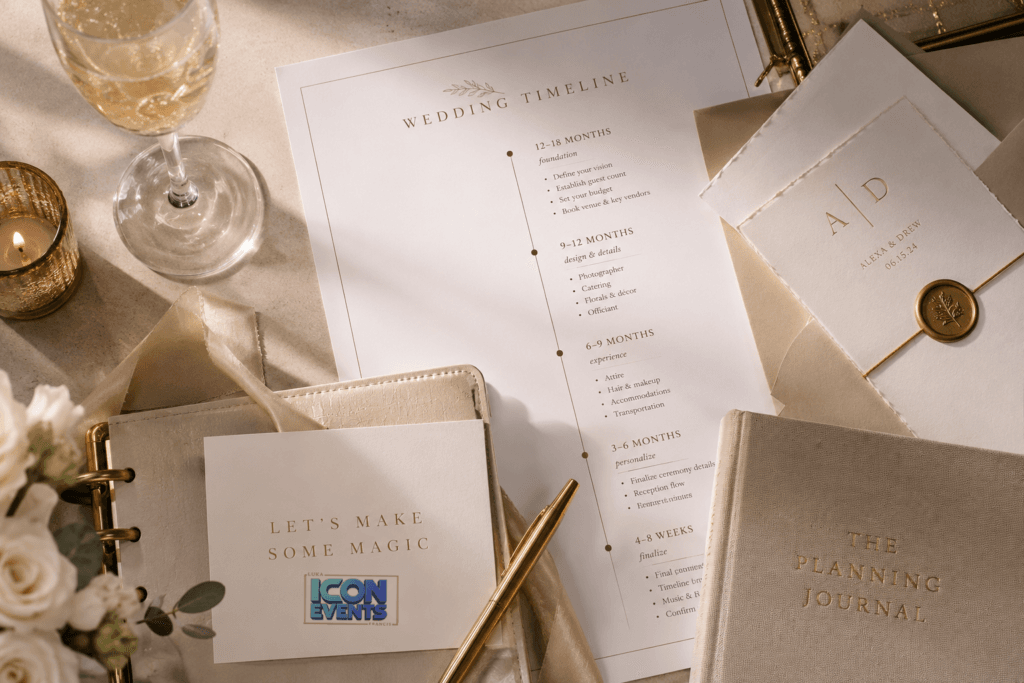
The Wedding Planning Timeline Nobody Talks About
You said yes. The ring is on. Your family and friends are excited.
Then, usually sooner than expected, someone asks:
“So, have you started planning yet?”
Suddenly, the excitement comes with a little pressure.
Where do you begin? What needs to be booked first? Which decisions can wait? How far in advance should you contact vendors—and what happens when you do things in the wrong order?
Most couples know there is supposed to be a wedding planning timeline. What they are rarely told is that planning a wedding is not simply about completing a checklist. It is about making decisions in the right sequence.
Some choices determine everything that comes after them. Others can remain flexible until much closer to the wedding.
After more than three decades of working with couples and wedding professionals across Niagara-on-the-Lake, the Niagara Region, Hamilton and beyond, I have seen how much of a difference that sequence can make.
The couples who feel calm and present on their wedding day are not necessarily the ones who planned every detail immediately. They are usually the ones who understood what mattered at each stage—and gave themselves enough time to make thoughtful decisions.
This is the wedding planning timeline nobody talks about.
Before the Timeline Begins: Understand the Order
Before booking anything, establish the foundation of the wedding you actually want.
That means having an honest conversation about:
- The approximate number of guests
- Your overall investment range
- The type of celebration you want
- The atmosphere you want guests to experience
- The elements that matter most to each of you
You do not need every answer yet. You do, however, need enough clarity to avoid making major decisions that conflict with one another.
A venue cannot be chosen properly without understanding your approximate guest count. Your date affects vendor availability. Your location influences transportation, accommodations and logistics. Your priorities determine where your investment should go.
The goal is not to have the entire wedding figured out before you begin.
The goal is to make the decisions that cannot easily change before moving on to the ones that can.
Your Wedding Planning Timeline at a Glance
12–18 months before: Establish your vision, guest range and priorities. Secure your venue and the professionals with limited availability.
9–12 months before: Build your core vendor team and begin shaping the visual and emotional direction of the day.
6–9 months before: Confirm attire, beauty services, accommodations, transportation and guest logistics.
3–6 months before: Personalize the ceremony and reception, refine the timeline and finalize important experience details.
4–8 weeks before: Confirm final numbers, vendor logistics, music, speeches, floor plans and the complete wedding-day schedule.
Every wedding is different, so this timeline should be treated as a roadmap rather than a rigid set of rules. A small weekday wedding may come together more quickly. A destination celebration or peak-season Saturday may require considerably more lead time.
12–18 Months Before: Build the Foundation
This is the stage couples most commonly underestimate, particularly when planning a Saturday wedding during peak season in Niagara-on-the-Lake or the broader Niagara Region.
Popular wineries, historic hotels, estate venues and boutique wedding professionals often accept a limited number of weddings each season. Prime dates can disappear well before couples expect them to.
Establish Your Vision and Guest Range
Before touring venues, discuss the kind of wedding you want to create.
Do you imagine an intimate dinner with the people closest to you? A larger celebration with a full dance floor? A winery wedding? A historic hotel? A destination experience?
Your wedding should reflect who you are—not what social media, family expectations or tradition suggest it is supposed to be.
This is also the time to begin the guest-list conversation.
It can be one of the most emotionally complicated parts of planning, but your approximate number affects almost every major decision that follows. It determines which venues are realistic, how your investment will be allocated and what kind of experience you can comfortably create.
You do not need a final attendance number yet. You need a realistic range.
Choose Your Venue and Date
Your venue establishes the physical framework for the wedding.
It affects:
- Your guest capacity
- Your ceremony and reception options
- Food and beverage requirements
- Setup and teardown limitations
- Noise restrictions
- Accessibility
- Transportation
- Accommodations
- The overall atmosphere of the day
When considering a venue, look beyond how it appears in photographs. Take our wedding vendor questions checklist to your consultations so you can compare responsibilities, communication, and backup plans.
Ask what is included, what must be brought in, when vendors can access the property, how transitions between spaces will work and what restrictions may affect your plans.
Once the venue and date are confirmed, the rest of the wedding can begin taking shape.
Secure Your Limited-Availability Professionals
After confirming your venue, prioritize the professionals who can only be in one place at a time and who play a significant role in the experience.
Depending on your priorities, this may include:
- A wedding planner or coordinator
- Photographer
- Videographer
- DJ and MC
- Live musicians
- Officiant
- Specialized floral or design professionals
There is no universal order that works for every couple.
A couple who cares deeply about photography may secure their photographer immediately. A couple who wants an energetic, highly personalized reception may prioritize entertainment. A couple planning a logistically complex weekend may begin with a planner.
What matters is recognizing that experienced, in-demand professionals often book well in advance—especially when they intentionally limit the number of weddings they accept.
Do not wait until every smaller detail is resolved before reaching out to the people most important to your experience.
9–12 Months Before: Build Your Core Team
With your venue and primary professionals secured, you now have a framework from which to build.
This stage is about bringing together the people who will shape how the wedding looks, feels and functions.
Photography and Videography
Your photographer and videographer preserve how the wedding is remembered.
Beyond reviewing portfolios, pay attention to how they communicate, how they approach timelines and whether their personality feels comfortable to be around.
These professionals will be with you during some of the most personal and emotional moments of the day. Their presence matters almost as much as their finished work.
Catering and Bar Service
For many hotels and traditional venues, food and beverage are handled internally.
For private properties, estates or venues that allow outside catering, this decision needs to happen earlier. Your caterer may need to coordinate staffing, rentals, kitchen access, service timing and cleanup requirements.
Dinner timing also influences the rest of the reception, including speeches, formal dances and when the dance floor opens.
Your Officiant
A great ceremony feels personal, natural and connected to the couple standing at the front of the room.
An experienced officiant will help you understand the ceremony structure, legal requirements, vows, readings and any cultural or religious elements you want to include. Check Ontario’s official guide to getting married for current information on documents and authorized officiants.
The ceremony should not feel like something you need to rush through before the reception begins. It is the reason everyone has gathered.
Florals, Décor and Design
Your florist and décor team help translate your ideas into a cohesive physical environment.
You do not need to know the name of every flower or have a complete design plan before reaching out. Begin with how you want the space to feel.
Romantic? Modern? Warm? Minimal? Dramatic? Garden-inspired?
The strongest designs are not always the ones with the most elements. They are the ones where each choice feels intentional.
6–9 Months Before: Shape the Guest Experience
At this point, the major framework should be established. Now you can begin focusing on the details that influence how the day feels for you and your guests.
Wedding Attire
Wedding attire often requires more time than expected.
Gowns may need several months for ordering, delivery and alterations. Suits or custom pieces may also require fittings and adjustments.
Choosing attire earlier gives you room to make decisions calmly rather than accepting whatever can be completed quickly.
Hair and Makeup
Hair and makeup professionals—particularly those who specialize in weddings and can accommodate larger wedding parties—often book well in advance.
Consider whether they will come to you, how many people will require services and how much preparation time needs to be built into the morning schedule.
Accommodations and Transportation
For weddings involving out-of-town guests, begin confirming hotel blocks and transportation plans.
This is especially important in areas such as Niagara-on-the-Lake, where accommodations can fill quickly during peak tourism and wedding seasons.
Think through the complete guest journey:
- Where will guests stay?
- How will they reach the venue?
- Will transportation be provided?
- Is parking available?
- How will guests return safely at the end of the evening?
These details may not appear in wedding photographs, but they strongly influence how comfortable and cared for guests feel.
Begin Deeper Planning Conversations
This is also when conversations with your core vendors should begin moving beyond general ideas.
Your professionals should start understanding your priorities, personalities and the atmosphere you are trying to create.
For entertainment, this means discussing more than a list of songs.
It includes:
- How guests will experience the ceremony
- The atmosphere during cocktails and dinner
- The pace of introductions and formalities
- How speeches will be handled
- The transition from dinner into dancing
- The musical energy you want throughout the evening
- Any family dynamics or sensitive moments that should be approached carefully
The strongest wedding experiences are not built through online forms alone. They are built through communication.
3–6 Months Before: Make the Wedding Personal
The major decisions are now in place.
This is the stage when the wedding begins feeling less like a collection of bookings and more like your celebration.
Finalize the Ceremony Experience
Work with your officiant and ceremony professionals to confirm:
- The processional order
- Ceremony music
- Readings
- Vows
- Cultural or religious traditions
- Microphone requirements
- Signing music
- The recessional
Consider how each moment will transition into the next.
A beautiful song is only part of the experience. Timing, volume, communication and awareness of what is happening in the space are equally important.
Develop the Reception Flow
Your planner or coordinator, venue, caterer, photographer, videographer and entertainment professional should begin working from a shared understanding of the evening.
The reception timeline may include:
- Guest arrival
- Wedding-party introductions
- The couple’s entrance
- Dinner service
- Speeches
- Cake cutting
- First dances
- Parent dances
- Cultural traditions
- Special presentations
- The opening of the dance floor
- Late-night food
- The final song
The goal is not to schedule every minute so rigidly that the celebration cannot breathe.
The goal is to create a natural flow that keeps guests engaged without making the evening feel rushed.
Confirm Invitations and Menu Direction
Finalize your invitation list and make sure your RSVP deadline gives you enough time to meet the venue or caterer’s final-count requirements.
You may also be confirming:
- Menu selections
- Dietary restrictions
- Children’s meals
- Vendor meals
- Seating plans
- Table arrangements
Your official guaranteed guest count is usually due closer to the wedding. Follow the deadline in your venue or catering agreement rather than assuming every property operates the same way.
Finalize Personalized Details
This is also the time to confirm any custom elements that require production or coordination, such as:
- Signage
- Favours
- Custom graphics
- Guest-experience installations
- Photo booth arrangements
- Special dances
- Family traditions
- Surprise performances
- Memorial moments
Choose the elements that genuinely mean something to you.
Your wedding does not need more details simply for the sake of having them. It needs the right details.
4–8 Weeks Before: Bring Everything Together
This stage should not be about reinventing the wedding.
It should be about confirming decisions, sharing information and making sure the people responsible for the day are aligned.
Confirm the Final Guest Count
Submit your final attendance numbers and meal selections according to the deadlines provided by your venue and caterer.
Confirm:
- Dietary restrictions
- Vendor meals
- Seating assignments
- Children’s meals
- Accessibility requirements
- Highchairs or booster seats
- Any guests requiring additional assistance
Complete the Final Timeline
Your final schedule should be shared with every professional whose work depends on timing.
This includes your:
- Venue
- Planner or coordinator
- Caterer
- Photographer
- Videographer
- DJ and MC
- Officiant
- Transportation provider
- Other participating vendors
Everyone should understand arrival times, setup requirements, formalities, key contacts and any special instructions.
Finalize Music and Announcements
Provide your entertainment professional with the information needed to represent you properly.
This may include:
- Ceremony selections
- Entrance music
- First-dance selections
- Parent dances
- Must-play songs
- Do-not-play songs
- Dedications
- Pronunciations
- Speech order
- Special announcements
- Cultural traditions
- Surprise moments
Your music preferences matter, but they are only part of the planning.
The way those moments are introduced, timed and connected to the rest of the evening is what makes them feel natural.
Confirm the Wedding Party’s Role
Make sure everyone involved in the ceremony, introductions and speeches knows what is expected.
Confirm:
- Where they need to be
- When they need to arrive
- Their introduction order
- Who is speaking
- How long speeches should be
- Who is responsible for rings, gifts or special items
- Who should be contacted if something changes
Clear communication prevents the couple from becoming the information desk on their wedding day.
The Final Week: Stop Planning and Start Trusting
By the final week, your major decisions should be complete.
There may still be small adjustments, but this is not the time to add unnecessary formalities or rebuild the entire schedule.
Confirm the essentials, hand responsibility to the professionals you hired and give yourself permission to step back.
You should not spend your wedding morning answering questions about vendor arrival times or checking whether the room is ready.
That is what your team is there to manage.
The Timeline Mistakes That Create Unnecessary Stress
Most wedding-planning stress does not come from one major disaster. It comes from smaller decisions being delayed until they begin affecting one another.
Waiting for Every Detail to Feel Perfect
You do not need to know your centrepieces before contacting a photographer. You do not need a complete playlist before booking entertainment.
Secure the people and places that matter most, then develop the details with them.
Making Decisions in Isolation
A dinner schedule affects speeches. Speeches affect photography coverage. Photography affects sunset portraits. All of those decisions influence when the dance floor can open.
A wedding is a connected experience.
The earlier your vendors begin communicating and understanding the larger plan, the more naturally the day will flow.
Treating Planning as Form Completion
Planning forms are helpful, but they cannot replace meaningful conversations.
Your professionals should understand more than names, times and song titles. They should understand what matters to you, what you are worried about and how you want the day to feel.
Adding Too Much to the Schedule
Not every tradition needs to be included.
A reception can quickly become overloaded with speeches, games, presentations, performances and formalities. When too many moments compete for attention, guests can begin feeling as though they are watching a program rather than participating in a celebration.
Choose the moments that mean something. Give them enough space to matter.
How the Right Team Changes the Experience
When your wedding professionals are experienced, communicative and invested in the outcome, the timeline stops feeling like a burden.
It becomes a shared plan.
As your DJ and MC, my role is to help guide the reception flow, coordinate key transitions with your venue and vendor team, and pay attention to how the room is responding.
I am watching the pace of dinner. I am communicating with the photographer before an important moment begins. I am making sure speakers are prepared. I am adjusting the energy when the schedule shifts. I am reading the room once the dance floor opens rather than forcing a plan that no longer fits the moment.
That does not replace the role of a professional planner or coordinator.
It means working alongside them so you are not watching the clock, tracking down family members or wondering what is supposed to happen next.
You should be able to experience your wedding from inside the celebration—not manage it from the sidelines.
That is what thoughtful, boutique service looks like in practice.
Your Timeline Should Give You Confidence
A wedding planning timeline is not meant to make you feel behind.
It is meant to help you understand what deserves your attention now, what can wait and which decisions will make everything else easier.
Begin with the parts that cannot easily change.
Choose professionals you trust.
Have real conversations.
Then allow the day to unfold with enough structure to feel seamless and enough flexibility to feel alive.
If you are planning a wedding in Niagara-on-the-Lake, Niagara Falls, the Niagara Region, Hamilton, Stoney Creek, London, Ontario, or a destination beyond Canada, Icon Events provides experienced DJ and MC services built around thoughtful planning, polished reception flow and the way you want your celebration to feel.
To check availability or begin the conversation, contact Icon Events or email hello@icon.events.