
By Luka Miller · Published
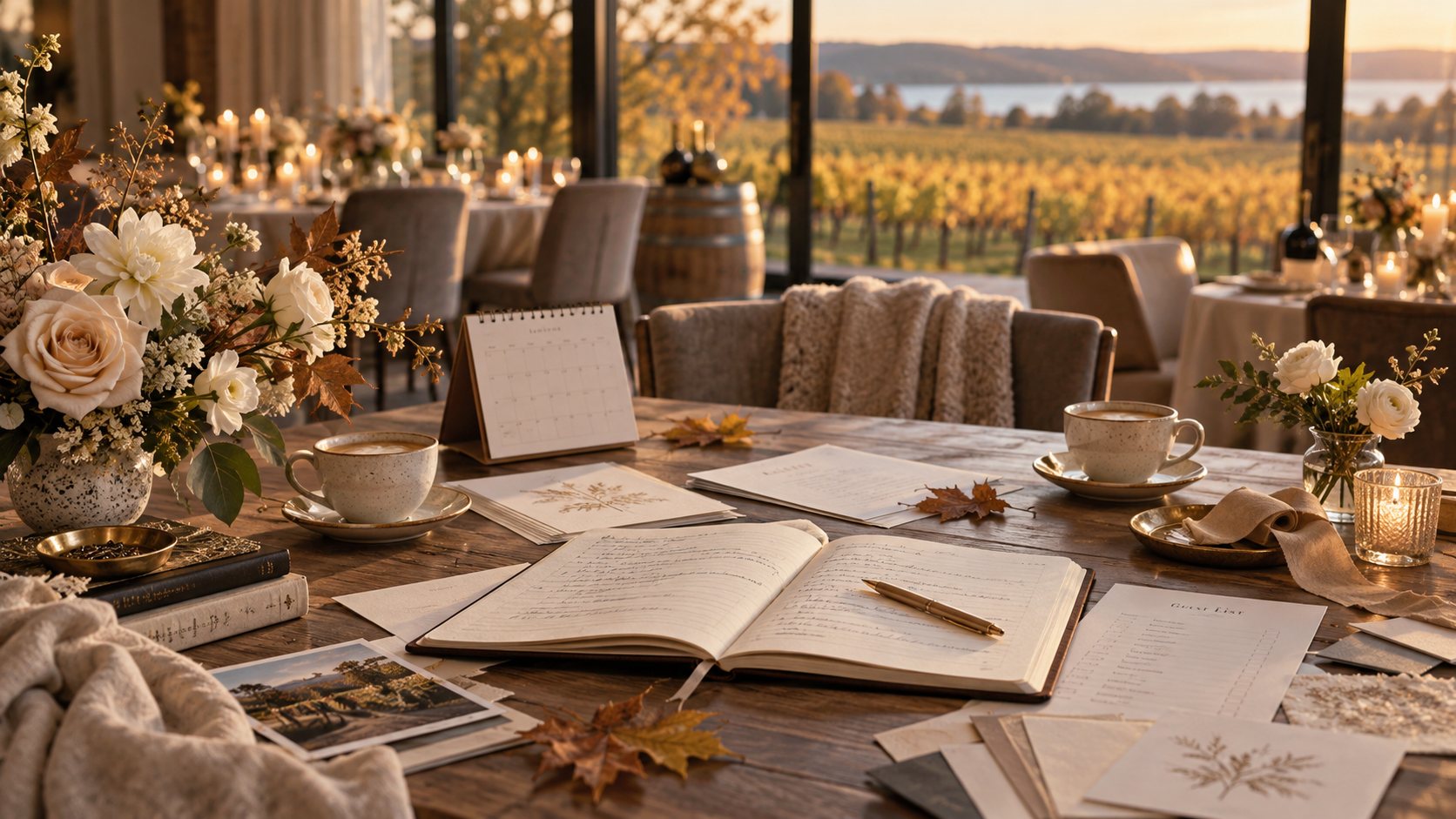
Before you get too far into wedding planning, take a moment to picture the people who will be there. These six wedding planning decisions can help you start with a clear direction before the holidays.
Your families meeting over cocktails. Friends catching up over dinner. Someone you never expected to dance staying for one more song.
Those moments are worth thinking about early. They help you decide where to celebrate, who to invite, and which people you want helping you bring the day together.
October is a useful time to have those conversations. Once holiday gatherings, travel plans, and family commitments start filling the calendar, finding an evening to sit down together can become its own planning exercise.
You don’t need to finish planning your wedding before December. A few thoughtful decisions now can give you direction, make vendor conversations more useful, and leave you with less to revisit in January.
These six wedding planning decisions build on one another, starting with the experience you want to share.
1. Agree on How You Want the Day to Feel
The first of your wedding planning decisions is about the experience you want to share. Talk about that before you build a vendor shortlist.
Do you picture a relaxed dinner with your closest people, followed by a lively dance floor? A celebration that brings together different cultures and generations? An elegant evening with room for both meaningful speeches and a proper party?
Be specific about what matters to you.
“We want everyone dancing” is a starting point. “We want our parents to feel as included as our friends, and we don’t want the evening interrupted by constant announcements” gives your team something much more useful to work with.
From an entertainment perspective, those details shape the music, the hosting style, and the way the evening moves.
They also help you assess the people you’re considering. Pay attention to who asks thoughtful questions, understands your priorities, and can explain how they would support them.
2. Set a Budget Range You’re Both Comfortable With
Of all your early wedding planning decisions, setting a comfortable budget gives your research direction.
Agree on a comfortable overall range, clarify any family contributions, and identify the parts of the celebration that matter most to you. You can refine individual figures as you gather proposals.
If sharing a memorable meal is a priority, give that room in the budget. If you’re picturing an evening where everyone stays and celebrates, consider what you want from the entertainment and the reception experience.
When comparing proposals, look at the responsibilities behind the price. For a wedding DJ and MC, that might include planning conversations, ceremony support, coordination with your other vendors, and guiding the evening as it unfolds.
Understanding what each person will take care of helps you make a more informed decision.
Having this conversation now also saves you from spending weeks researching options that don’t fit what you want to invest.
3. Establish a Working Guest Count
Your guest count is one of the wedding planning decisions that shapes almost everything else. You don’t need a finished invitation list. You do need a realistic estimate.
Start by listing the people you expect to invite, then discuss where there is flexibility. If family members are contributing guests, bring them into that conversation early.
A celebration for 70 people and one for 180 will need different spaces and budgets. The number also influences how the room feels, how guests move through it, and how close they are to the moments you want them to share.
When looking at venues, consider how the space will work with your expected attendance. Ask where cocktails happen, how dinner is arranged, and where dancing takes place.
A room should feel comfortable during each part of the celebration. A working guest count helps you assess that before you fall in love with a setting.
4. Choose a Date Range and Understand Your Flexibility
If you have a meaningful date in mind, start there. Otherwise, agree on a season or a few possible weekends.
When weighing wedding planning decisions about your date, decide which matters most: a particular weekend, a particular venue, or the availability of someone you really want on your team.
That gives you a clear way to evaluate options. If the venue is your priority, you can explore its available dates. If there’s a photographer, planner, or entertainer you feel strongly about, you can check their calendar while you’re still flexible.
Availability is specific to the date and the business. A direct conversation will tell you more than a general booking timeline.
Before confirming your venue and date, check with any vendors you consider essential. That small step can prevent a difficult choice later.
5. Build a Venue Shortlist and Ask About the Whole Day
Let your earlier wedding planning decisions guide the venue shortlist. Choose a few spaces that fit your guest count, budget, and vision, then arrange visits.
For couples considering Niagara-on-the-Lake or the wider Niagara Region, it’s easy to become attached to the landscape, architecture, or setting. During your visit, give equal attention to what your guests will experience.
Think through the day from their perspective:
- Where will they go after the ceremony?
- Is there comfortable space to gather during cocktails?
- Can they hear the speeches clearly?
- How does the dinner space connect to the dance floor?
- What happens if outdoor plans need to move inside?
- Are there sound restrictions or an earlier finish time to consider?
These questions help you understand how the celebration can unfold in that particular space.
The relationship between dinner, speeches, and dancing deserves attention early. If the dance floor is separated from the tables, for example, your team needs a thoughtful way to bring everyone into the next part of the evening.
Ask your venue how it typically works with the planner, caterer, DJ, and MC. Clear responsibilities make it easier for everyone to support the same plan.
6. Start Conversations With Your Priority Vendors
With those wedding planning decisions in place—a working budget, guest count, and date range—you can have more productive conversations with the people you’re considering.
Choose the two or three vendors whose involvement matters most to you and introduce yourselves. If you’re building your shortlist locally, our trusted wedding vendors are a useful place to start.
For entertainment, share more than your date and venue. Tell the person about your guests, the atmosphere you’re imagining, and anything you’re concerned about.
You might want different generations to feel included. You may have cultural traditions to incorporate, a strong sense of the music you love, or reservations about an MC style that feels too intrusive.
Those details matter.
Ask how they prepare, how they work with the rest of your team, and how they respond when the schedule changes. Listen for an approach that gives you confidence and feels comfortable to you.
At Icon Events, those conversations help me understand what matters to you and what your celebration needs. The preparation informs the decisions I make throughout the day: when to give a moment space, when to guide guests, and when the room is ready for a change in energy.
That understanding starts well before the wedding.
Your Wedding Planning Decisions Checklist Before the Holidays
Use this checklist to keep your wedding planning decisions together. Before the holidays arrive, aim to have:
- A shared picture of how you want the celebration to feel.
- A budget range you’re comfortable with.
- A realistic guest estimate.
- A date range and an understanding of your flexibility.
- A venue shortlist, with visits arranged where possible.
- Initial conversations with your priority vendors.
For a broader view of what comes next, The Knot’s wedding planning checklist can help you organise the remaining tasks around your own timeline.
Some couples will be ready to confirm bookings. Others will still be exploring. Both can be useful progress when you understand what you’re working towards.
Set aside an evening together, work through your wedding planning decisions, and choose your next few steps. You’ll have a clearer place to return to when planning picks up again after the holidays.
Turn Your Decisions Into a Simple Action Plan
Give yourselves one focused evening to turn these wedding planning decisions into a short action plan. Bring your calendars, your first guest estimate, and any venue or vendor information you have already collected. Start by agreeing on what you know, then write down the questions that still need an answer. You can make useful progress without solving every detail at once.
Keep a shared note with three simple columns: the decision, the next action, and the person taking care of it. For the venue shortlist, the next action might be requesting available dates and arranging two visits. For entertainment, it might be sending an enquiry with your preferred season, guest count, and the atmosphere you want. Give each action a realistic date so it stays manageable alongside work and holiday plans.
Record the assumptions behind each choice. If your guest estimate includes possible family additions, mark those separately. If a venue proposal leaves out rentals or ceremony support, note the questions to ask before comparing it with another proposal. Keep written responses and proposals together so you can revisit the details without relying on memory.
Before you finish, choose a date to check in again. Use that conversation to review replies, update your shortlist, and decide what is ready to move forward. If you are waiting on information, identify who will follow up. This gives you a clear stopping point for the evening and a practical starting point after the holidays.
Wedding Planning Before the Holidays: FAQs
What wedding planning decisions should we make before the holidays?
Start with your shared vision, a comfortable budget range, an estimated guest count, a date range, a venue shortlist, and conversations with your priority vendors. You don’t need every detail settled; the aim is to know your next steps and have a clear place to resume planning after the holidays.
Should we book our venue before our DJ and MC?
Your venue and date usually give vendor conversations a firm starting point. If a particular DJ and MC is essential to your celebration, check their availability before confirming the venue. Compare available dates together so you can make a decision that fits both your setting and your entertainment priorities.
Can we contact wedding vendors before choosing an exact date?
Yes. Share your preferred season or date range, possible venues, estimated guest count, and the atmosphere you want. That gives vendors enough context for an initial conversation. Ask what information they need to confirm availability and what their booking process requires once you choose a date.
Do we need a final guest list before visiting wedding venues?
No. A realistic estimate is enough to build your shortlist. Bring an approximate minimum and maximum guest count, then ask how each venue handles seating, cocktails, speeches, and dancing at those numbers. Check capacity and pricing before making a commitment.
Let’s Talk About Your Celebration
If you’re planning a wedding in Niagara-on-the-Lake, the Niagara Region, Hamilton, or a destination beyond, I’d love to hear what you’re imagining.
We can talk about your guests, the moments that matter to you, and how music and hosting can help bring the celebration together.
Luka Miller is the founder of Icon Events, providing wedding DJ and MC entertainment in Niagara-on-the-Lake, the Niagara Region, Hamilton, and for destination events worldwide. His approach centres on thoughtful preparation, reading the room, and helping guests feel part of the celebration.