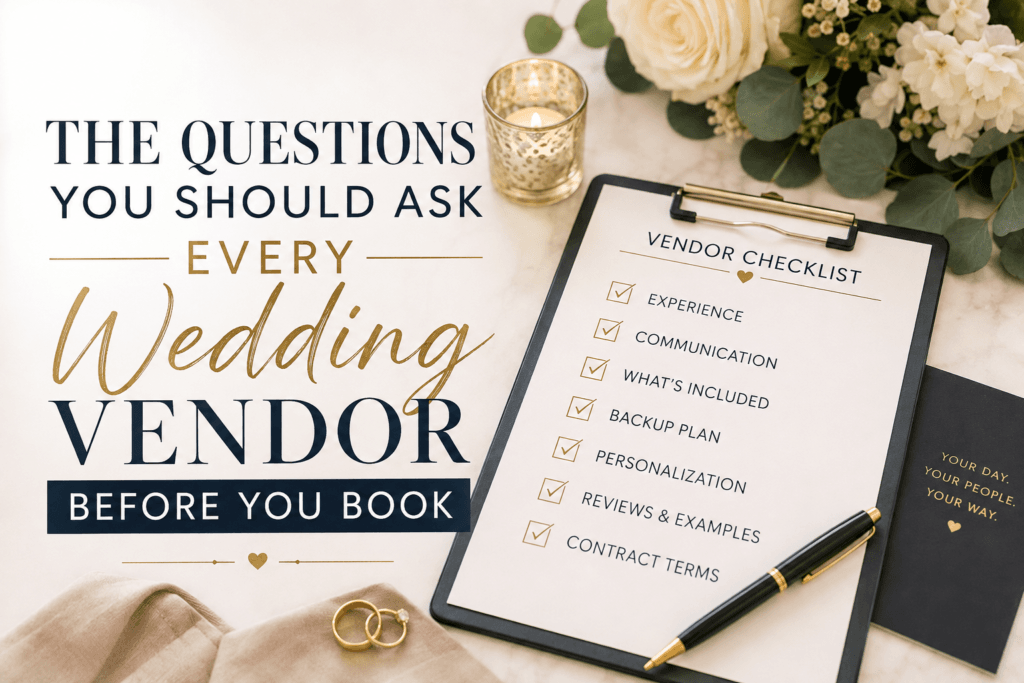
Choosing your wedding vendors can feel overwhelming. Knowing the right questions to ask wedding vendors helps you compare more than prices and portfolios.
You are comparing portfolios, personalities, packages, reviews and prices—often without knowing what actually separates one professional from another.
Most couples know to ask whether a vendor is available and how much they charge. Those questions matter, but they do not tell you what it will feel like to work with that person when timelines change, communication gets complicated or something unexpected happens on the wedding day.
A polished website can show you the finished result.
The right questions reveal what happens behind the scenes.
Before you sign a contract, here are the questions every wedding vendor should be prepared to answer—and why those answers matter.
1. How Much Experience Do You Have With Weddings Like Ours?
Years in business can be helpful, but experience should also be relevant to the wedding you are planning.
A backyard celebration for 50 guests has different logistical demands than a formal ballroom reception for 250. A winery wedding has different sound, access and timing considerations than a hotel wedding.
Ask whether the vendor has worked with:
- Your approximate guest count
- Your type of venue
- Your ceremony and reception format
- Similar cultural or family traditions
- Weddings with a comparable timeline
You are not necessarily looking for someone who has done your exact wedding before.
You are looking for evidence that they understand the environment, can anticipate potential challenges and know how to adapt their service to your plans.
2. Who Will Actually Be Working at Our Wedding?
Do not assume the person conducting the consultation will be the person who arrives on your wedding day.
Some companies have several employees, subcontractors or associate teams. That is not automatically a problem, but you should understand exactly who will be responsible for your wedding.
Ask:
- Will you personally be there?
- When will we meet the person assigned to us?
- Can we review their experience?
- Will the same person handle our planning and communication?
- What happens if the assigned vendor becomes unavailable?
The relationship you build during the planning process matters.
You should know who you are trusting before the wedding day arrives.
3. What Is Included in Your Price?
A lower starting price does not always mean a lower final price.
Ask each vendor to explain exactly what is included, what is optional and what could create an additional charge.
Depending on the service, that may include:
- Planning meetings
- Travel
- Setup and teardown
- Additional hours
- Assistants or support staff
- Equipment or rentals
- Revisions
- Delivery
- Taxes and service charges
The goal is not to choose the least expensive option.
It is to compare complete services rather than numbers that may represent very different levels of support.
A transparent professional should be comfortable explaining where your investment goes.
4. How Do You Communicate During the Planning Process?
Good communication is one of the strongest indicators of how supported you will feel throughout your engagement.
Ask how communication normally works:
- Will we communicate by email, phone, video call or a planning portal?
- How quickly do you normally respond?
- How many planning meetings are included?
- When will the final details be confirmed?
- Who should we contact with questions?
Pay attention to the communication you are already receiving.
Are the answers clear?
Do they listen before recommending something?
Do they respond to the questions you actually asked?
The planning experience usually gives you a preview of the service you will receive on the wedding day.
5. How Do You Personalize Your Service?
Your wedding should not feel like a package being repeated for another couple.
Ask how the vendor learns about you, your priorities and the experience you want to create.
For an entertainment company, that could mean understanding your guests, musical preferences, family dynamics, traditions and the way you want the evening to feel.
For a photographer, it may involve learning which relationships and moments are most meaningful to you.
For a planner or decorator, it could mean translating your ideas into a celebration that feels cohesive and personal.
Look for vendors who ask thoughtful questions rather than immediately telling you what they always do.
6. How Do You Work With the Rest of the Vendor Team?
A wedding is a live event with many moving parts.
The venue, planner, photographer, entertainment team, catering staff and other vendors all affect one another.
Ask how the vendor approaches collaboration.
Do they communicate with the venue before the wedding?
Do they review the timeline with the other professionals involved?
How do they handle a change that affects another vendor’s responsibilities?
The strongest wedding teams do not operate in isolation. They understand that every decision can influence the flow of the entire day.
7. What Happens When the Timeline Changes?
Wedding timelines rarely unfold exactly as written.
Hair and makeup may take longer than expected. Transportation can be delayed. Speeches may run over. Weather may change the ceremony plans.
Ask how the vendor responds when the schedule shifts.
Experienced professionals should be able to protect the important moments without making the couple feel rushed or drawing unnecessary attention to the problem.
For entertainment, this may mean adjusting formalities, shortening a transition or rebuilding momentum after a delay.
For photography, it could mean reorganizing the portrait schedule while protecting the images that matter most.
You are not only hiring someone to perform a service.
You are hiring their judgment when the original plan no longer fits the moment.
8. What Is Your Backup Plan?
Every professional should have a plan for unexpected circumstances.
The details will depend on the service, but useful questions include:
- What happens if you become sick or injured?
- Do you have backup equipment?
- How are our files, plans or selections stored?
- What happens during severe weather?
- Do you carry business and liability insurance?
- Who can step in during an emergency?
A confident professional will not be offended by these questions.
They will understand that preparedness is part of the service you are paying for. Our guide to professional wedding DJ standards explains what that preparation looks like for entertainment.
9. Can We See Complete Examples of Your Work?
Highlight reels and social media posts are designed to show the strongest moments.
Ask whether you can see a more complete example.
For a photographer or videographer, that may mean a full wedding gallery or film.
For a planner or decorator, it could mean examples showing the entire event rather than one styled table.
For entertainment, reviews, live footage and detailed testimonials can reveal more than a short clip of a busy dance floor.
You want to understand the consistency of the vendor’s work—not just their best 15 seconds.
10. How Do You Handle Requests and Boundaries?
A professional should be flexible, but they should also be honest about what they can deliver well.
Ask how they handle:
- Special requests
- Last-minute changes
- Family members giving instructions
- Venue restrictions
- Services outside their normal scope
- Ideas they believe may not work as intended
You should feel heard, but you should also value a vendor who is willing to explain a concern rather than agreeing to everything.
Experience is most valuable when it comes with honest guidance.
11. What Do You Need From Us?
A strong working relationship goes both ways.
Ask what information, decisions or materials the vendor will need from you and when they will need them.
This could include:
- Final guest counts
- Timelines
- Floor plans
- Family photo lists
- Song selections
- Meal requirements
- Venue access information
- Final payments
Clear expectations reduce last-minute pressure and help the vendor deliver their best work.
12. What Does Your Contract Cover?
Always review the contract before making a payment.
It should clearly explain:
- The services being provided
- Payment dates
- Cancellation and postponement policies
- Overtime rates
- Travel or additional expenses
- Responsibilities of both parties
- What happens if the vendor cannot perform
- Any limitations or exclusions
Do not be afraid to ask for clarification. Ontario couples can also review the provincial guidance on signing or cancelling a consumer contract before committing.
A contract should protect both sides and ensure everyone understands what has been agreed upon.
Wedding Vendor Red Flags to Watch For
One concern does not always mean you should walk away, but repeated warning signs deserve attention.
Be cautious when a vendor:
- Avoids answering direct questions
- Creates pressure to book immediately
- Will not provide a written agreement
- Has unclear or constantly changing pricing
- Speaks poorly about previous clients or other vendors
- Makes unrealistic promises
- Shows little interest in your priorities
- Takes a long time to respond without explanation
- Cannot explain their backup plan
- Focuses entirely on features without discussing your experience
Trust your instincts.
You should feel informed and respected—not pressured, confused or dismissed.
Price Matters, but Confidence Matters Too
Every wedding has a budget, and price will always be part of the decision.
But choosing solely by price can hide important differences in communication, preparation, experience and the level of responsibility a vendor is willing to take on.
Keep a simple comparison sheet after each consultation. Record the named person providing the service, the complete price, what is included, planning deadlines, and the backup arrangements discussed. Note any unanswered questions and request clarification in writing before paying a deposit. This makes differences easier to evaluate without relying on memory or sales impressions.
The right professional will not simply tell you what they provide.
They will help you understand how their work supports the experience you are trying to create.
That confidence becomes especially valuable on the wedding day, when you should be present with your guests instead of managing the people you hired.
Questions to Ask Wedding Vendors: FAQ
How many wedding vendors should we interview?
There is no required number, but speaking with two or three strong candidates in each important category can help you understand the differences in their approach.
Once you find someone whose work, communication and values align with yours, continuing to interview vendors solely to find a lower price may create more confusion than clarity.
Should we choose the most experienced vendor?
Experience is important, but it should be paired with communication, professionalism and genuine interest in your wedding.
The best choice is usually the vendor whose experience is relevant to your plans and whose approach makes you feel understood and supported.
Is it appropriate to ask vendors about insurance and backup plans?
Yes.
Professional vendors should expect questions about insurance, emergencies and contingency plans. These questions show that you are taking your wedding seriously.
What should we do when two vendors offer very different prices?
Compare the complete scope of service.
Look at the time involved, level of planning, experience, staffing, inclusions, support and responsibilities each vendor is taking on. Similar-sounding packages can represent very different services.
How can we tell whether a vendor is being honest with us?
Look for clear answers, realistic expectations and consistency between what they say, what their contract promises and what previous clients describe.
Transparency does not mean telling you everything you want to hear. Sometimes the most honest answer is that an idea needs to be adjusted.
Ask Better Questions. Choose With Confidence.
The right wedding vendors should welcome thoughtful questions.
They should be able to explain their process, set clear expectations and help you understand what you are investing in.
After more than three decades in the entertainment industry, I believe couples deserve honest answers before they make an important decision—not surprises after the contract has been signed.
If you are looking for wedding entertainment built around communication, thoughtful planning and the way you want the celebration to feel, let’s start the conversation.
Icon Events serves Niagara-on-the-Lake, the Niagara Region, Hamilton and destination events worldwide.
When you are ready to discuss your priorities, start a conversation with Icon Events.
Practical next steps for wedding vendors
When planning around wedding vendors, connect the timeline, guest experience and production requirements before the final vendor meetings. Confirm responsibilities, access, sound coverage, cueing and contingency details so every professional works from the same plan.
Use the ideas in “The Questions You Should Ask Every Wedding Vendor Before You Book” to create a written run of show that fits the venue, guest count and priorities. Clear decisions about music, hosting and audio help the celebration feel natural while keeping important moments on schedule.
Icon Events can help translate your wedding vendors priorities into music, MC direction and event production that support the people in the room.

Talk with Icon Events about your date, venue and guest experience.