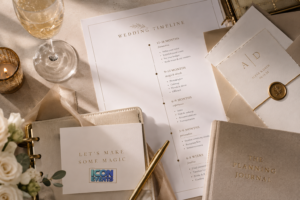
wedding reception timeline mistakes

The biggest timeline mistake I see isn’t that couples “forget” something major.

It’s that they don’t design the day around energy flow.

On paper, the schedule might look fine:

  • Ceremony at 3:00
  • Cocktail hour at 4:00
  • Reception at 5:30
  • Dinner at 6:00
  • Speeches, first dance, party…

But here’s what often gets missed—especially here in Niagara-on-the-Lake.

Overloading the Reception (Or Leaving Big Gaps)

A common pattern:

  • Too many formalities stacked together: grand entrance, first dance, parent dances, speeches, cake cutting… all one after the other. Guests sit and sit and sit.
  • Or the opposite: huge gaps between key moments with nothing planned, so the room’s energy drops.

In both cases, by the time you want people on the dance floor, they’re either:

  • Exhausted and full, or
  • Lost interest and started thinking about going home

Forgetting Real-World Logistics

Niagara-on-the-Lake is beautiful—and also uniquely tricky for timelines.

Couples often forget to account for:

  • Travel time between ceremony locations, photo spots, and the reception
  • Sunset photos (photographers understandably love our golden hour over the vineyards and lakefront)
  • Noise bylaws + venue cut-off times (many NOTL venues have strict end times due to local regulations)
  • Tourist traffic in peak season

On your spreadsheet, it looks like this:

  • Dancing starts at 9:00 p.m.
  • Reception ends at midnight

In reality, with speeches starting late, sunset photos running over, and the band/DJ being asked to “hold off just ten more minutes”—your dance floor might not properly launch until 10:15… and then you’re stopping at 11:00 because of venue rules.

An Example of a “Looks Fine, But Isn’t” Timeline

Here’s a version of a timeline I see often:

  • 3:00 – Ceremony
  • 4:00 – Cocktail hour
  • 5:30 – Guests seated, grand entrance
  • 5:45 – First dance
  • 6:00 – Dinner served
  • 7:00 – Speeches start
  • 8:00 – Cake cutting
  • 8:15 – Parent dances
  • 8:30 – Open dance floor

On paper? Reasonable.

In real life? A few issues:

  • Speeches almost always run longer than expected (especially if there’s no one professionally MC’ing and gently keeping things on track).
  • Guests have been seated since 5:30. By 8:30, they’ve been in their chairs for three hours.
  • There’s no “tease” of dancing earlier to warm up the room.

By the time we officially “open the dance floor,” guests are physically tired and mentally checked out. You can feel it.

The fix isn’t complicated—but you do need to know where the hidden timing traps are.

Sneaky Timing Issues That Quietly Kill Your Dance Floor

Here are some of the most common reception timing problems I see as a DJ/MC and lighting designer in Niagara-on-the-Lake.

1. Speeches That Don’t Have a Clear Home

Speeches are important and emotional. But they can be the #1 culprit behind late, rushed, and low-energy dance floors.

Common issues:

  • Too many speeches (“Just one more person wants to say a few words…”)
  • No guidance on timing (“Just keep it short” is very subjective!)
  • All speeches at the end of dinner—right when people are the sleepiest

Better approach:

  • Limit speeches to a small, intentional group.
  • Group them in two short blocks (e.g., one early in dinner, one just before dessert).
  • Have your DJ/MC or planner politely keep them on schedule.

2. Long Gaps Before Opening the Dance Floor

If your DJ is waiting 20–30 minutes after cake cutting, slideshow, or bouquet toss with nothing else happening, guests start to drift:

  • Older guests decide to head home
  • Friends sneak out for a long smoke or fresh air break
  • People sit and scroll on their phones

You want the transition from “structured moments” to “dance party” to be quick and intentional, not an afterthought.

This is where a good MC makes a huge difference:

  • Announcing “We’re just a couple of minutes away from opening the dance floor—get your dancing shoes ready!”
  • Using music to build anticipation as the last formality wraps up

3. Late-Night Food at the Wrong Time

Late-night food is fantastic… unless it accidentally kills your own party.

If you serve pizza, poutine, or sliders right after the dance floor is packed, guess what happens? Everyone leaves the floor to eat. Energy drops. Some never come back.

Instead:

  • Time late-night food after the dance floor has been going for a bit and you hit a natural lull
  • Or set it up to the side and have your MC/DJ announce it without framing it as “the next big event” (so it doesn’t compete with dancing)

4. Ignoring Cut-Off and Noise Rules

Many Niagara-on-the-Lake venues have strict:

  • End times (e.g., music off by 11:00 p.m. or midnight)
  • Noise bylaws that might affect outdoor or tented setups

If your ideal first dance time is 9:30 and your end time is 11:00, you only have 90 minutes of open dancing—that’s a short window.

A DJ who works locally will:

  • Ask about your venue’s rules
  • Help you back-plan the night so you get the most out of your party time

5. Underestimating Setup Time for DJ and Lighting

Another subtle issue: not allowing enough time for your entertainment and lighting team to set up and soundcheck before guests enter.

If we’re rushed on setup because access to the room is late, you might end up with:

  • Delayed room reveal
  • No chance to test your first dance song or audio for speeches
  • Lighting that’s only “half there” when guests arrive

Building proper setup time into your venue access timeline is one of the easiest ways to protect your reception experience.

How a DJ/MC and Lighting Designer Helps Keep Your Day On Track

You might be wondering, “Isn’t timeline stuff more of a planner’s job?”

Sometimes, yes. If you have a full-service planner, they’ll be deeply involved. But even then, your DJ/MC is the one with the microphone and direct control over the room’s energy.

Here’s what we actually do beyond pressing play.

We Help Design a Realistic Reception Timeline

At Icon Events, when couples book us for DJ/MC services, we always:

  • Ask about your venue, ceremony time, and any restrictions
  • Find out which moments matter most to you (more dancing? more speeches? laid-back vibe?)
  • Look at your photographer’s plan, your meal style (plated vs buffet), and guest count

Then we help you build a reception timeline that:

  • Flows naturally
  • Leaves buffer time for inevitable delays
  • Maximizes the hours when music and dancing are allowed

We know how long things actually take with 120 excited guests… not just on paper.

We Act as Your Reception “Traffic Controller”

Once the party starts, we’re constantly watching the room and adjusting in real time:

  • If dinner is running late, we’ll help decide what to trim or shift so you still have solid dance time.
  • If speeches are going long, we’ll work with your planner or venue coordinator to gently guide things back on track.
  • If the dance floor is on fire, we’ll suggest pushing cake cutting or bouquet toss a bit later instead of interrupting the moment.

You shouldn’t have to worry about any of that. That’s our job.

We Use Music and Lighting to Guide the Room

Timeline isn’t just about a written schedule—it’s also about how the room feels from moment to moment.

As DJ/MC and lighting designer, we use:

  • Music to signal transitions (upbeat songs as we move from dinner into first dances, for example)
  • Lighting to shift the mood (soft and romantic for speeches, more dynamic and colourful once the dance floor opens)
  • MC announcements to keep guests informed and gently move them from one moment to the next

When all those elements work together, your guests never feel confused or bored—they just feel like the night “flows.”

A Sample Timeline That Helps Your Reception Flow Naturally

Every wedding is different, but here’s an example of a Niagara-on-the-Lake reception timeline that tends to work well when music has to end around 11:00 p.m.

Let’s assume:

  • Ceremony: 3:00–3:30 p.m.
  • Cocktail hour: 3:30–4:30 p.m.
  • Reception: 5:30–11:00 p.m.

5:30 – Guests Seated

  • Light background music, candles/lighting set, guests find their seats.

5:45 – Wedding Party & Couple Grand Entrance

  • High-energy song, big welcome from MC.

5:50 – Welcome Toast + Housekeeping

  • One short welcome (often a parent or the couple), thank yous, any quick notes.

6:00 – Dinner Service Begins

  • Music: relaxed, fits your style and age mix of the room.

6:20 – First Speech Block

  • 2–3 short speeches while first course is done / main is being cleared:
    • E.g., maid of honour + best man

7:05 – Second Speech Block

  • 2–3 additional speeches (parents, couple) as dessert is served.
  • We keep these focused and well-introduced as MC.

7:30 – Cake Cutting / Sweet Moment

  • Move to cake table or have it brought near dance floor.
  • Short announcement, song, and photo moment.

7:40 – First Dance

  • We invite everyone to gather around the dance floor.
  • Your special song, lighting softened to focus on you two.

7:45 – Parent Dances

  • One combined parent dance or two short separate dances.

7:55 – Open Dance Floor

  • We move straight into a few guaranteed crowd-pleasers to pull guests in early—no long gaps.

9:15 – Optional Bouquet / Garter / Game / Group Photo

  • A quick “event” if you want one, placed once the dance floor is established but not at its absolute peak.

9:30 – Late-Night Food

  • Quietly put out or lightly announced without making it a “hard stop” to the party.

10:50 – Last Dance

  • Chosen with you in advance—either a romantic moment for just you two, or a big group song with everyone on the floor.

11:00 – Music Off (Venue Rule), Guests Transition to After-Party or Shuttles

Within this framework, we keep things flexible. If the room is loving dancing at 9:15, we might slide your bouquet toss or photo-op ten minutes later. The written timeline gives us structure—but your guests’ energy gets the final say.

Practical Tips for Building a Stress-Free Reception Timeline

Here are some concrete steps you can take when creating your own wedding timeline.

1. Start With the Non-Negotiables

Before you fill in every minute, lock in:

  • Ceremony start time
  • Venue access times
  • Music end time / noise restrictions
  • Sunset time (for photos)

Everything else should be built around those.

2. Ask Your Vendors Specific Timing Questions

When you talk to your venue, photographer, and DJ/MC, ask:

  • “How much time do you recommend for ____ with our guest count?”
  • “Where do you usually see ____ work best in the evening?”
  • “What’s the most common timing mistake couples make here?”

As someone who’s worked many weddings in Niagara-on-the-Lake, I’m always happy to share what’s realistic for that particular space.

3. Give Each Part of the Evening Breathing Room

Rough timing guidelines:

  • Grand entrance + welcome: 15–20 minutes
  • Dinner (plated): 1.5–2 hours depending on guest count
  • Speeches: 30–45 minutes total if well-managed
  • First dances: 10–15 minutes total
  • Open dancing: aim for at least 2–2.5 hours

If you’re tight on time, protecting your dance floor should be a priority if having a great party is important to you.

4. Decide What You’ll Cut If You’re Running Late

This is a big one almost nobody talks about.

Before the day, decide: if we’re running behind, what’s most important?

For example:

  • Would you rather cut one speech and keep more dance time?
  • Would you skip tossing the bouquet if dinner was slow?
  • Would you move a slideshow to cocktail hour to avoid eating into the evening?

Your DJ/MC and/or planner can help make those calls in the moment based on what you care about most.

5. Remember: The Goal Is Flow, Not Perfection

No wedding runs exactly to the minute. That’s okay.

What matters is:

  • You feel taken care of, not stressed.
  • Your guests always feel like something is happening, not waiting.
  • The energy of the night builds naturally towards a full, joyful dance floor.

A thoughtful timeline, and vendors who know how to adapt it in real time, are how you get there.

Final Thoughts: You Don’t Have to Figure This Out Alone

You’re not expected to know how long it really takes to serve 150 meals, turn over a ceremony space, or transition 120 people from cocktail hour to dinner.

That’s our world.

As a DJ, MC, and lighting designer serving Niagara-on-the-Lake, I’ve seen the impact a great (or not-so-great) timeline has on a couple’s experience and memories.

If you take nothing else from this, remember:

  • A beautiful, high-energy reception doesn’t “just happen.” It’s the result of a well-thought-out timeline and vendors who know how to guide it.
  • The biggest timeline mistake couples make is not planning around energy flow—and that’s completely fixable.
  • You deserve to be present in your moments, not watching the clock or worrying about what’s next.

If you’d like help reviewing your reception timeline or building one from scratch, the Icon Events team is happy to walk through it with you. Together, we can design a wedding day that flows naturally, keeps your guests engaged, and gives you the packed dance floor you’re dreaming of.


Ready to plan a reception that actually feels as good as it looks?
Reach out to Icon Events to talk through your Niagara-on-the-Lake wedding timeline, DJ entertainment, MC services, and lighting design. Let’s make sure every moment—and every song—happens at just the right time.

Recommended Posts

No comment yet, add your voice below!


Add a Comment

Your email address will not be published. Required fields are marked *